
St. Louis City Projected Versus Actual Release
A projected date is an estimate or calculated sentence milestone. An actual release date records when the custodian completed departure. Those dates can differ. A court may authorize release before the St. Louis City Justice Center finishes hold review, identity checks, property steps, and other processing. A Missouri DOC minimum date can mark a sentence calculation without proving that parole was granted or that another case will not keep the person in custody.
Custody type comes first. A pretrial CJC detainee usually has no sentence-based projected date because release turns on bond, charging action, a court order, or another legal event. A person serving a local sentence depends on the judgment, jail credit, and the City’s calculation. A Missouri prisoner depends on DOC sentence calculations and state law. A person who leaves CJC for Missouri DOC has transferred. That is not community release.
Scheduled is not actual. A minimum, maximum, conditional, parole-set, or court-authorized date does not establish the moment a person physically leaves custody.
- Projected date
- An estimated or calculated future milestone that can still change.
- Actual release
- The completed departure event recorded by the custodian.
- Detainer
- A request or legal hold from another authority that can block community release.
- Concurrent sentences
- Sentences structured to run at the same time rather than one after another.
Find St. Louis City Projected Release Dates
Begin with the St. Louis City case in Missouri Case.net. Read the judgment, sentence length, offense, jail credit, and whether multiple terms are concurrent or consecutive. Since January 2025, City municipal cases also appear in Case.net. The court record establishes what was ordered. It does not calculate every DOC date or prove when jail processing finished.
For a state prisoner, search the Missouri DOC Offender Search by DOC number when possible. Otherwise use the full name and compare birth information, offense, cause number, sentence county, location, status, and as-of time. The public screen covers active offenders and excludes discharged people. If the visible record does not explain the date, use DOC Offender Inquiry or ask the institution caseworker which public sentence field applies.
- Determine whether the person is pretrial, serving a City sentence, or committed to Missouri DOC.
- Read the matching Case.net judgment, including sentence length, jail credit, and concurrent or consecutive terms.
- For a DOC case, open the individual state result and compare the cause number and sentence county.
- Identify the minimum or maximum field shown and any special statutory minimum tied to the offense.
- Ask the caseworker, field officer, or DOC inquiry to explain which current date applies.
- Treat a parole-set date as contingent until the actual release event occurs.
- Confirm departure with the completed custodian record or a source notification.
For a local sentence, contact City Corrections at (314) 621-5848 and request the person’s sentence-calculation or release-record route. No current public CJC formula for general local good time was verified. Do not apply Missouri prison rules to a City sentence. The St. Louis City release-record search explains the released-person Letter of Incarceration and court comparison.
Note: A City detainee moved to Missouri DOC remains in custody, so CJC absence cannot establish a community release date.
St. Louis City Minimum and Maximum Dates
Missouri’s verified historical data uses exact terms rather than one broad “projected release” label. The DOC nightly file defines a Sentence-I Minimum Release Date for an active sentence and a Sentence Maximum Release Date for the sentence’s maximum release or expiration day. It also contains a completed flag, sentence date, length, concurrent or consecutive indicator, probation information, offense county, and sentence county.
The minimum and maximum fields can frame a likely time period, but neither is an appointment for physical release. The minimum can be affected by the sentence structure and legal eligibility. The maximum can be reached while another sentence, warrant, or detainer remains. A completed flag shows that the identified sentence is complete, not that every unrelated custody basis has ended.
| DOC field | How to read it |
|---|---|
| Sentence-I Minimum Release Date | DOC’s calculated minimum date for an active sentence |
| Sentence Maximum Release Date | The maximum release or expiration day for the sentence |
| Completed Flag | Y when the identified sentence is completed |
| CC/CS indicator | Whether terms are recorded as concurrent or consecutive |
| Sentence and county fields | Details used to match the calculation to the correct judgment |
Missouri DOC’s Sunshine Law page documents these historical data fields and their limits.
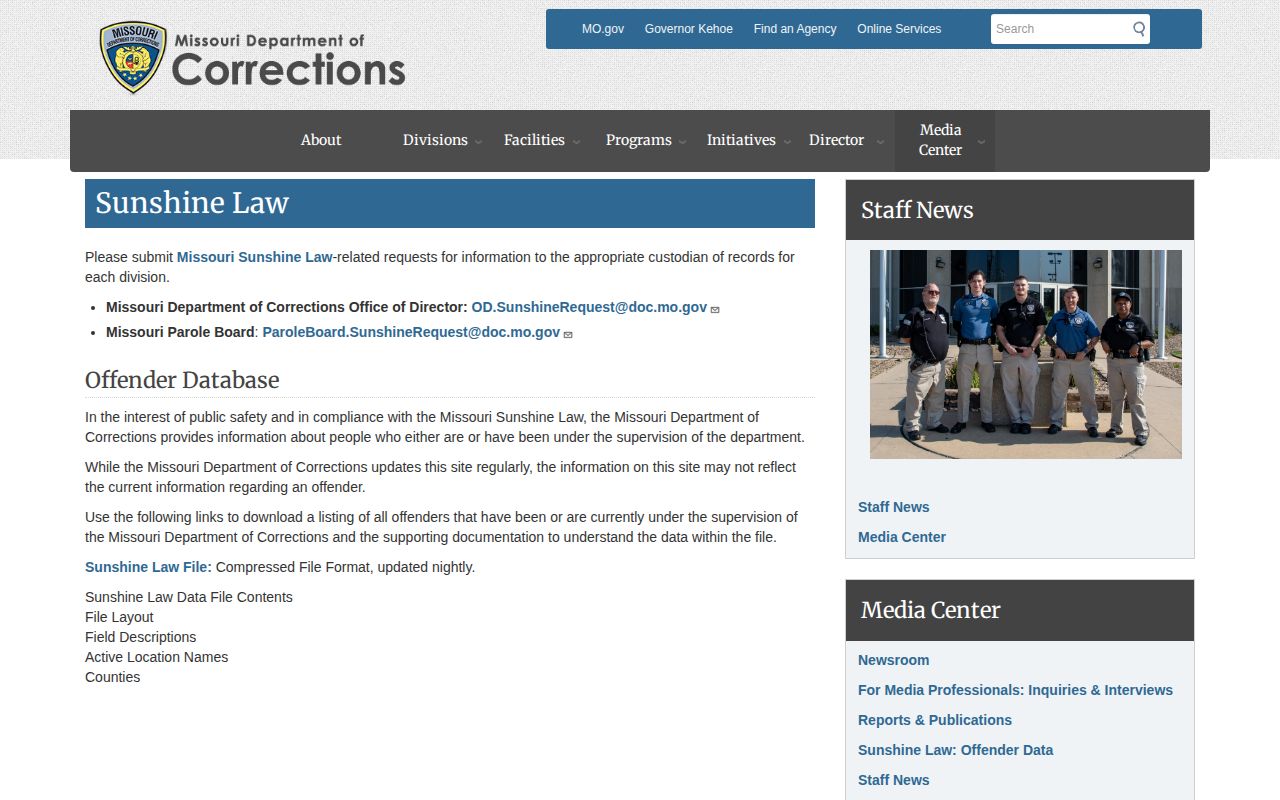
The documented layout gives each date a defined role, which is safer than treating every displayed date as a guaranteed departure.
Missouri Rules for St. Louis City Release
Missouri sentence calculations draw from the judgment and the statute that applies on the offense date. RSMo 558.011 divides many terms into prison and conditional-release portions, subject to exceptions. Conditional release is still part of the sentence. Physical release from prison can therefore lead to DOC community supervision rather than discharge.
RSMo 558.019 supplies the often-misquoted 85-percent rule. Under the current provision, a person convicted of a dangerous felony as defined in RSMo 556.061 and committed to DOC generally must serve 85 percent of the sentence, or reach age 70 after serving at least 40 percent, whichever comes first, subject to the statute’s terms and effective-date rules. The rule does not apply to every Missouri felony or every person in CJC.
Parole is another path. RSMo 217.690 grants authority to the Missouri Parole Board and addresses eligibility rules. A hearing does not guarantee release. DOC says the Board normally takes eight to twelve weeks after a hearing to decide, and its action may set another hearing or a future release date. The offense date, prior record, sentence wording, statutory version, and special laws can all matter.
Note: The 85-percent minimum applies to qualifying dangerous-felony cases, not to every Missouri prisoner or City jail sentence.
St. Louis City Conditional Release Dates
A Missouri sentence can include time in prison and a supervised conditional-release portion. This is why a person may leave the institution before the sentence’s maximum date yet remain under DOC authority. Conditional release should not be described as discharge. The field officer and DOC status can confirm whether the person is in the community under supervision.
The Missouri DOC conditional-release explanation addresses why a release can occur before the full sentence end.
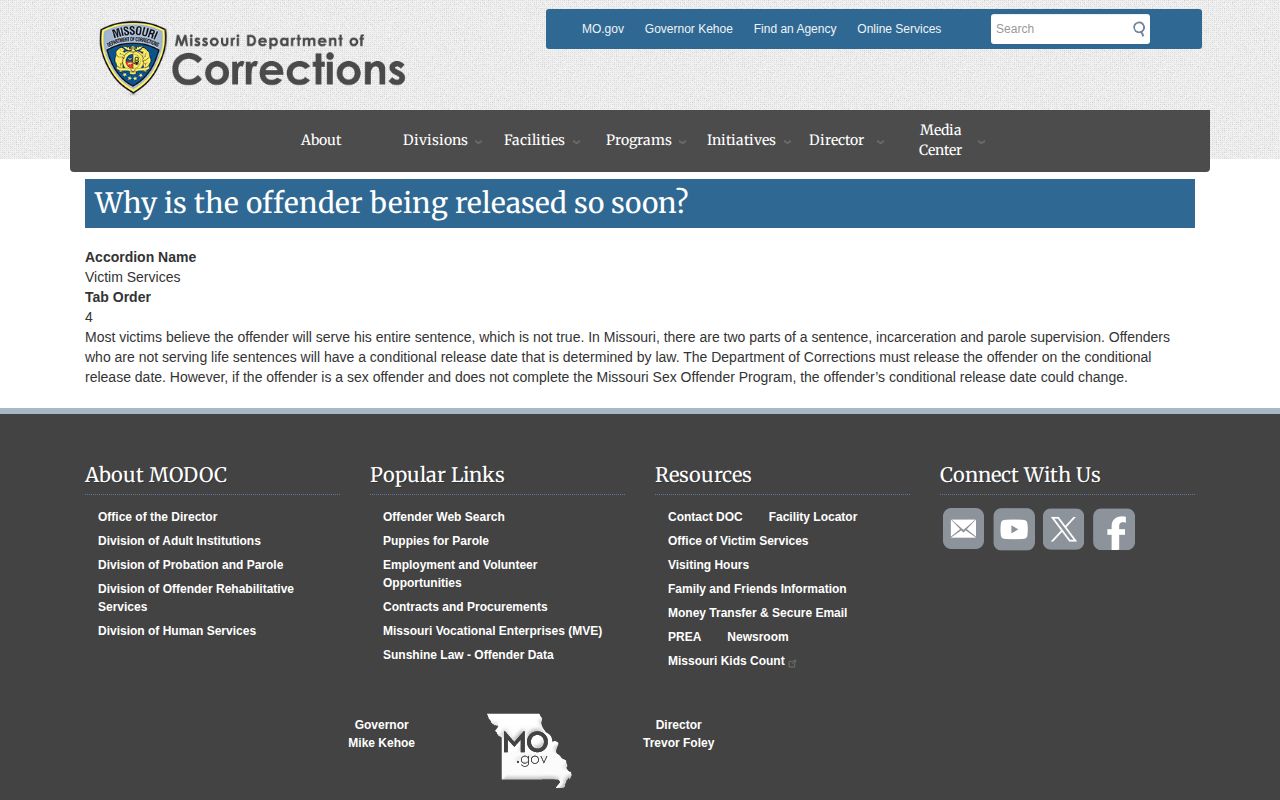
The official explanation connects a prison release date to the supervised part of the same sentence rather than treating it as complete discharge.
Probation differs. A court can order community supervision without a state-prison release. Earned compliance credits under RSMo 217.703 may shorten supervision for an eligible person, but those credits do not alter the day the person physically left CJC. To check whether state supervision remains active, compare the DOC record with the court case and assigned field office.
Why St. Louis City Release Dates Change
A projected date can move because the inputs or legal barriers change. An amended judgment may alter the sentence. Jail-time credit may be corrected. The structure of multiple terms can change the aggregate calculation. Conduct and required programming may affect some release decisions under governing law. Parole may be granted, denied, or set for later action. One sentence can reach a milestone while another lawful hold prevents release to the community.
| Factor | Possible effect | Best source |
|---|---|---|
| Amended court order | Changes sentence terms, credit, or authority | Case.net judgment and clerk record |
| Concurrent or consecutive terms | Changes how multiple sentences run or aggregate | Judgments and DOC sentence file |
| Jail-time credit | Changes time credited toward the sentence | Court judgment and custodian calculation |
| Parole Board action | May set a future release date or later hearing | Board process, official notice, and DOC status |
| Detainer or warrant | Can prevent community release or cause transfer | Issuing agency and release destination |
| New case or revocation | May create new custody or sentence consequences | Court docket and responsible agency |
A release record should state the destination or receiving authority when that field exists. Without it, leaving one facility can be mistaken for freedom. Ask whether the event was release to the community, transfer to Missouri DOC, transfer to another jail, or delivery to another authority.
St. Louis City Jail Good Time
No verified current CJC policy establishes a general local good-time formula or weekend-release adjustment. That gap matters. State prison statutes cannot simply be applied to a City jail sentence. Ask the City Division of Corrections for the sentence-calculation policy used in the identified case and for the person’s calculation or completed release record.
Start with the court judgment and any jail-credit language. Then call Corrections at (314) 621-5848. State whether the person is pretrial or serving a local sentence and ask which unit can explain the date. If the person has already left, request the released-person Data Entry route and a Letter of Incarceration. A Chapter 610 request can seek an existing booking and release transaction or sentence-calculation record, but the agency need not create a new explanation that does not exist.
Do not import a formula. Missouri DOC conditional-release and minimum-term rules do not automatically govern a sentence served at CJC.
Which St. Louis City Release Date?
Missouri’s historical file makes the key question unavoidable: which date is being shown? A minimum date, maximum date, completed flag, parole-set date, court release order, and actual custodian timestamp each mean something different. The concurrent or consecutive indicator also affects how the sentence should be read. This terminology is the distinctive local and state calculation issue behind a St. Louis City projected release search.
Ask the official who maintains the record to name the field and explain its role. If a web result simply shows a date without context, compare it with DOC’s published field definitions and the court judgment. Working-file data can be incomplete, rely partly on self-reported identity details, or lag behind a current event. A structured historical record is useful, but it is still a lead until the current custodian or court confirms the date.
Confirm St. Louis City Actual Release
For CJC, the City’s live locator is only a current-location tool. A person can be absent because of release, police-floor custody, a name mismatch, or transfer. After departure, ask Corrections Data Entry for the Letter of Incarceration or release transaction. Pair it with Case.net, because the docket provides the legal order while Corrections supplies the completed event.
For Missouri DOC, ask Offender Inquiry with the full name, DOC number, date of birth or another identifier, and one exact question about the minimum, maximum, or current release status. DOC says general email responses usually arrive within 24 regular business hours. A specific status question belongs with the caseworker or field officer. Current notifications can help track a pending event through the St. Louis City VINELink inmate search, but the alert remains secondary to the source record.
Public Record Search
Sponsored Results