
No St. Louis 72-Hour Roster
No verified official St. Louis City webpage has a 72-hour switch, rolling three-day view, or archive of released bookings. The City locator answers a different question: where a named person is currently held by the Division of Corrections. The daily population dashboard is also not a substitute. It reports totals, while a three-day release inquiry needs individual transactions and exact departure dates.
A City locator miss remains ambiguous. The person may have been released, may still be in police-floor or substation custody, or may not match the exact name entered. A person who departed the City Justice Center may also have transferred to Missouri DOC, another local agency, federal custody, or immigration custody. A completed City departure does not always mean release to the community.
St. Louis is an independent city. Its Justice Center, Corrections records, and Twenty-Second Judicial Circuit cases are separate from St. Louis County systems. Use City sources for a City booking.
Build a St. Louis Three-Day Range
The most direct substitute for a missing 72-hour list is a precisely framed request for existing records. Choose exact start and end timestamps. A weekend range, for example, may begin before the first relevant bond window and end after the next business day’s processing. The request should ask whether Corrections maintains an existing release report for that period. If it does not, seek the existing release transactions within the same range.
- Write down the beginning and ending date, time, and time zone for the three-day period.
- Address the request to the City of St. Louis and identify the Division of Corrections as the record holder.
- Ask first for an existing report of releases during the range, rather than asking staff to create a new list.
- Alternatively, request individual release transactions whose completed release timestamps fall within the range.
- List the desired open fields, including booked name, master number, facility, release date and time, release type, and destination.
- Ask for electronic records, segregable open portions, and an advance estimate of any fee.
The City’s Sunshine request channel is the official route. Under Missouri Chapter 610, an agency generally provides records it keeps. It need not create a custom compilation. A clear range lets the custodian locate responsive material and explain whether a daily or multi-day report already exists.
Note: Exact timestamps prevent a loosely stated “last three days” request from shifting while the agency processes it.
St. Louis 72-Hour Release Fields
There are no public feed columns to reproduce. The following inventory instead describes fields supported by the local release-record research and worth naming in a records request. Availability can vary. Closed details may be redacted, and the City’s actual codes control the meaning of each transaction.
| Field | Why it matters across three days |
|---|---|
| Booked name | Identifies the person tied to the release event. |
| Master or booking number | Separates people with similar names and repeated bookings. |
| Admission timestamp | Connects the departure to the correct custody episode. |
| Release timestamp | Places the completed event inside or outside the chosen range. |
| Release type or authority | May show the recorded basis for departure. |
| Releasing facility | Confirms whether the City Justice Center handled the event. |
| Destination or receiving agency | Distinguishes community departure from transfer. |
Associated holds and charges can help explain why a release order did not lead to immediate departure. A booking photo is a separate record component. It should be requested separately if needed. The public locator’s stated fields are only name, year of birth, race, sex, and facility, so those live results cannot supply this release inventory.
St. Louis Weekend Release Timing
A 72-hour range is especially useful over weekends and court holidays because several events may fall on different dates. The City’s bond page states that the City Justice Center second-floor payment window operates continuously on Saturdays, Sundays, and court holidays. It also warns that release takes several hours after bond is posted. Those are payment-window facts, not promised release hours.
Consider a bond paid late on one calendar day. Staff may finish release steps on the next day. A warrant, detainer, identification issue, or transport instruction may delay or redirect the person. The court docket might show authorization before the jail’s completed timestamp. For this reason, select records by completed release time rather than payment time or order time.
The City publishes monthly Corrections reports and statistics, which can provide operating context but not the requested roster of individual releases. The Corrections reports index shows the official reporting channel.
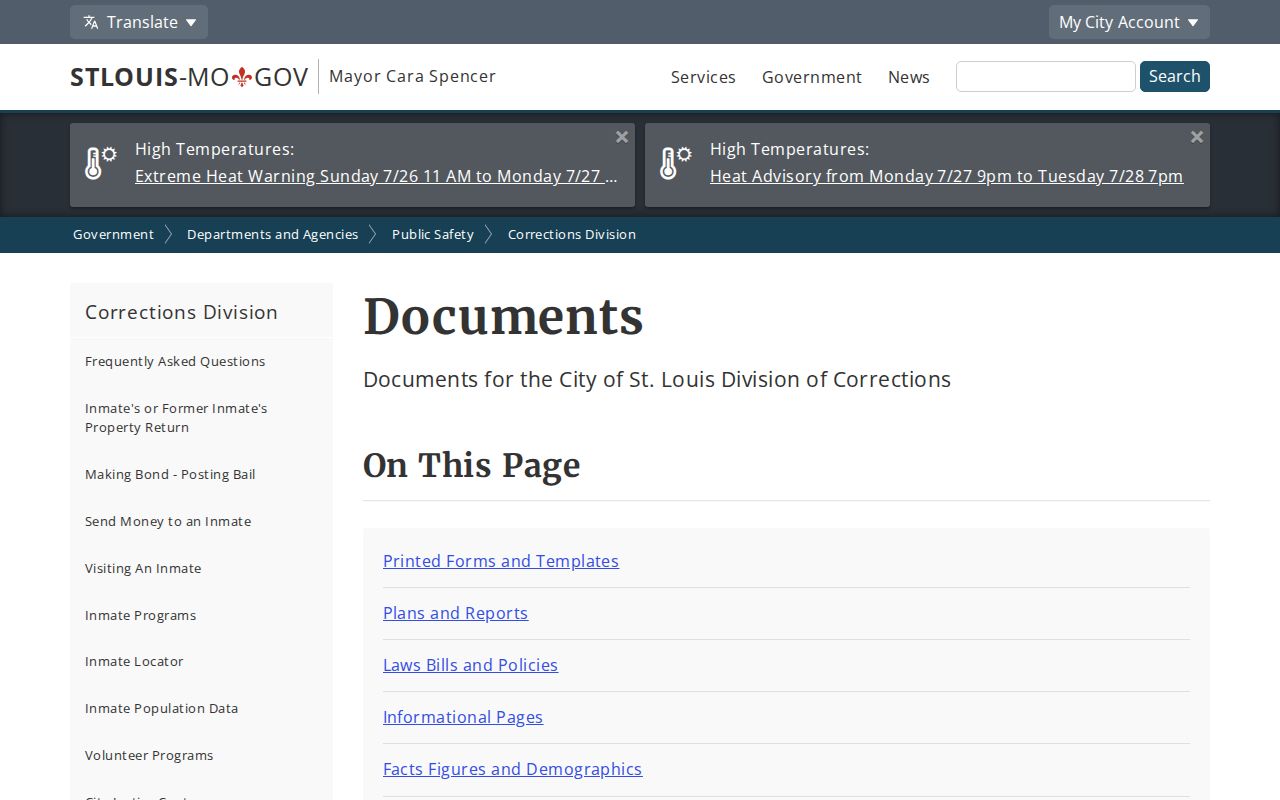
The reports should not be read as a hidden three-day feed. Individual release confirmation still comes from the transaction, letter, court record, or responsible office.
Verify Named St. Louis Releases
When only one person matters, a named-person check is faster and more reliable than seeking every transaction. Search the current City locator with the exact booked name. Then call the City Justice Center at (314) 621-5848. Ask whether the person remains confined and which unit can verify release. For a person already released by Corrections, the City documents a Letter of Incarceration through Data Entry.
Two official City pages list conflicting Data Entry extensions. The durable instruction is to call the main number and ask the operator for the current released-person Data Entry route. Provide the full booked name, approximate dates, year of birth if requested, and the master or booking number when known. Do not ask Corrections for a letter if the person was held only by the St. Louis Metropolitan Police Department. The City says its Corrections letter does not cover police-only custody.
Next, review Case.net for the City of St. Louis matter. Inspect bond events, release orders, warrants, judgment, sentence, and later entries. Since early 2025, City municipal matters also use Case.net. Pair the legal event with the Corrections departure record because neither timestamp automatically proves the other.
The same-day procedure is available on Jail Releases: 24 Hours, while the home search covers older named-person release records.
MOVANS and St. Louis Releases
Missouri MOVANS can supplement a three-day check when registration existed for a specific person. It is a notification service, not a public list of everyone released. Local custody and court data depend on participating agencies sending updates. A notification may arrive after an event, and a released record may later stop appearing. Save the SMS or email with its event time, then verify it with the agency that supplied the record.
The current Missouri MOVANS portal replaced the former third-party VINELink delivery workflow. Current notifications use SMS text or email. Former app and voice-call directions are obsolete. Missouri DOC release enrollment follows a separate route through DOC Office of Victim Services, and federal custody is outside MOVANS coverage.
The official portal is a useful secondary view of the source split.
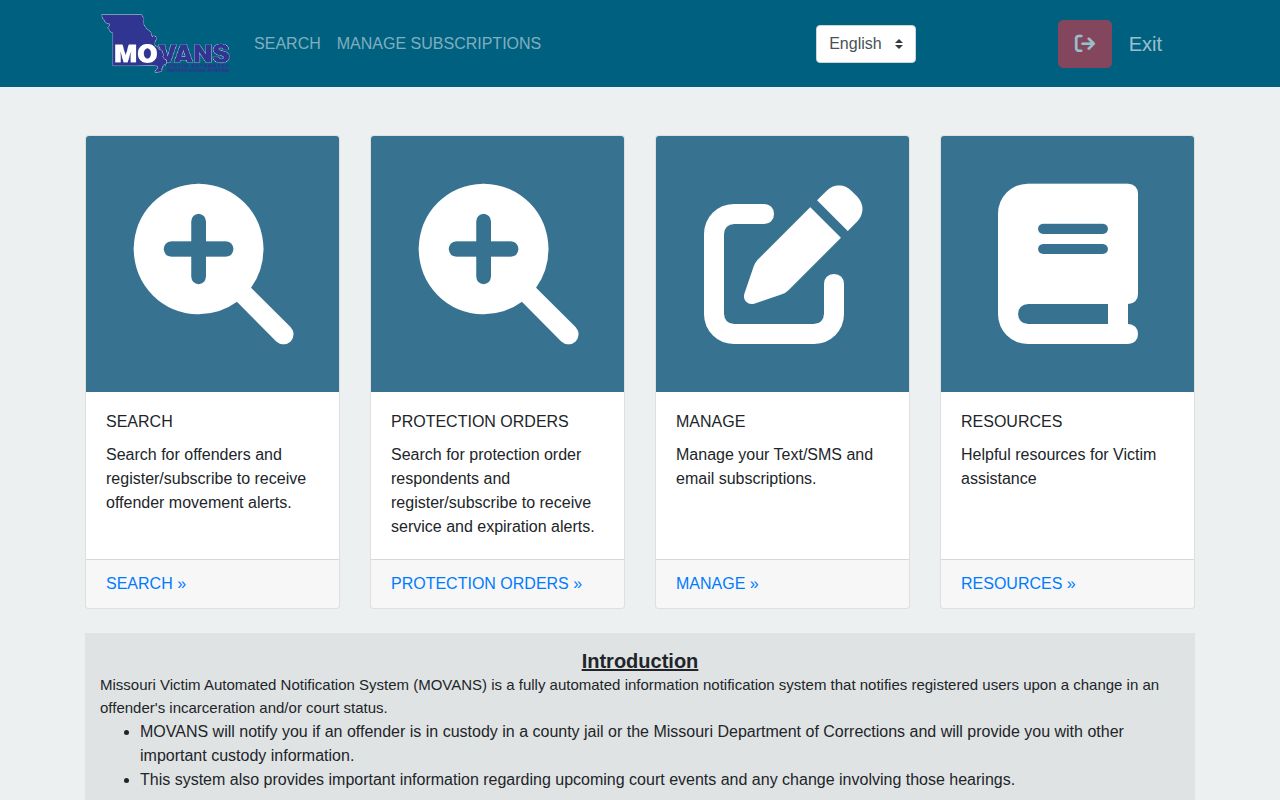
A MOVANS event should be matched to City Corrections or court records before drawing a conclusion about physical release.
Note: A notification confirms what MOVANS reported, while the completed agency transaction remains the stronger release record.
Where St. Louis Releases Go
A three-day release range can mix several outcomes. “Release” in City data means St. Louis City no longer holds the person on that booking. It does not, by itself, describe the next custody status. Asking for destination or receiving agency prevents a transfer from being mistaken for community release.
| Outcome | Best follow-up |
|---|---|
| Community release from CJC | City release transaction, Letter of Incarceration, and Case.net. |
| Transfer to Missouri DOC | DOC offender search while active, the court judgment, and DOC inquiry. |
| State parole or conditional release | DOC status and the assigned probation/parole field office. |
| Federal sentence or release | BOP Inmate Locator and federal docket. |
| Transfer to ICE | City destination field and ICE current-detention inquiry. |
The Missouri DOC public search expressly excludes discharged offenders. A no-result there cannot prove that a former City detainee never entered state custody. The BOP locator applies to federal prisoners, not local jail releases. ICE’s locator concerns current detention and is not a historic release archive. Keep each system tied to its own jurisdiction.
Finally, official release records can remain with an agency long after they vanish online. Missouri’s local retention schedule requires detainee files with admission and release information to be kept for at least five years after release, though local retention may be longer. That retention rule does not create an online 72-hour roster.